[:es]En esta entrada os mostramos el ensamblaje del robot DYOR BatBot realizado con TinkerCAD y fabricado con corte láser
Componentes:
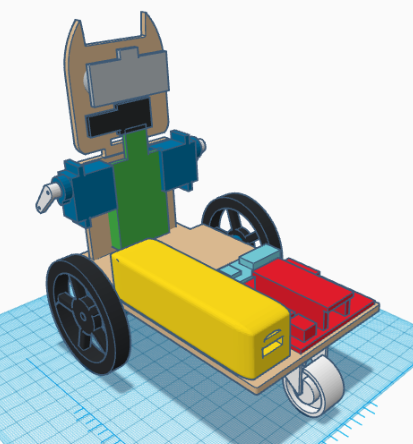
- Arduino Nano + Shield Arduino Nano I/O (rojo)
- Powerbank (amarillo)
- Ultrasonido HC-SR04 (gris claro)
- Zumbador de sonido (negro)
- Servos SG90 (azul oscuro) en el frontal
- Servos FS90R (azul oscuro) en la base
- Bluetooth (azul claro)
- Seguilíneas TCRT5000 (azul oscuro)
- Rueda loca (blanco)
- Ruedas FS90R (negro)
- Matriz de LEDs (verde)
Instrucciones:
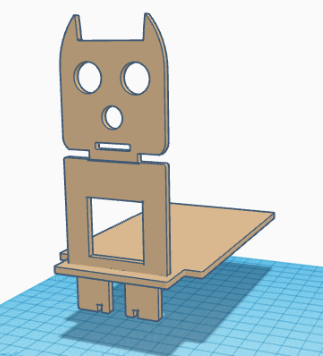
Colocar la pieza del frontal junto con la base y pegarlas.
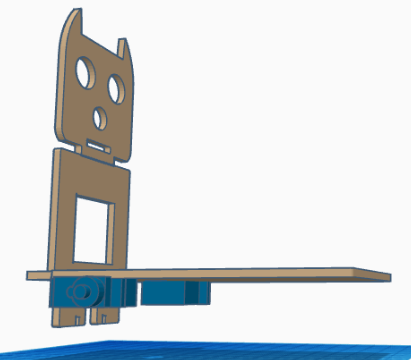
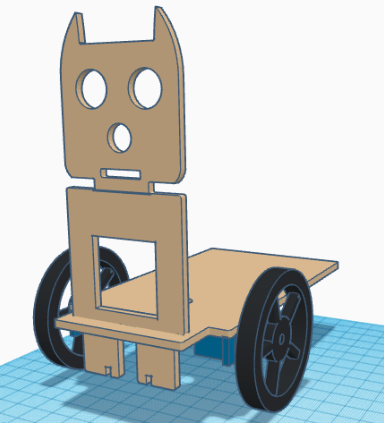
Pegar los servos FS90R a la base, estando el eje lo más atrás posible y atornillar las ruedas.
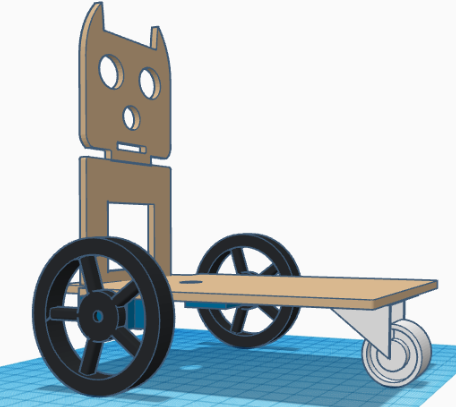
Pegar la rueda loca en la parte trasera de la base
Pegar el soporte del sensor TCRT5000 en los pies y pegar el sensor al soporte (por debajo).
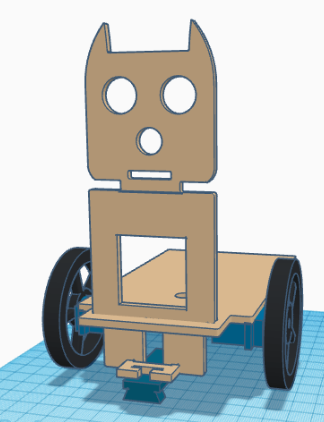
Pasar los cables, tanto de los servos FS90R como del sensor TCRT5000 por el orificio que tiene la base. Una vez pasados los cables, podremos pegar la matriz de LEDs al frontal.
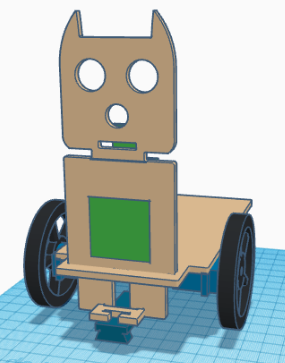
Colocar los cables de la matrix de LEDs en el conector que queda en la parte superior y pegar los servos SG90 en la parte trasera del frontal y atornillar la manivela (debemos asegurarnos que la posición de la manivela que se muestra es la de la posición mínima alcanzable, indicada por el tope mecánico de forma que los brazos se muevan hacia adelante).

Pegar el powerbank, placa de Arduino (Shield+Arduino Nano) y bluetooth en la base del robot y colocar los cables correspondientes.

Ahora, pegar el zumbador y el ultrasonido en el frontal del robot (con los conectores apuntando hacia arriba).
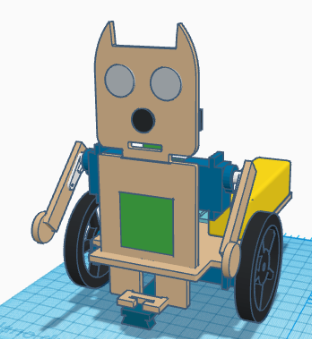
Finalmente pegar los brazos y las manos (circulares) a las manillas de los servos SG90.
 [:en]In this entry, we show the assembly of DYOR BatBot with TinkerCAD and make with laser cutting
Components:
- Arduino Nano + Shield Arduino Nano I/O (red)
- Powerbank (yellow)
- Ultrasound HC-SR04 (light grey)
- Buzzer (black)
- Servos SG90 (dark blue) in the frontal face
- Servos FS90R (dark blue) in the base
- Bluetooth (light blue)
- Linetracker TCRT5000 (blue)
- Caster wheel (white)
- FS90R wheels (black)
- LED Matrix (green)
Instructions:
Glue both parts, the base and the frontal face.
Glue the FS90R servos to the base, the servo axis has to be as far as possible to the frontal face and screw the wheels to the servos.
Glue the caster wheel to the base
Glue the TCRT5000 support just below at the feet and glue the TCRT5000 sensor to the support (glue it so the sensor is below the feet).
FS90R servo cables and TCRT5000 cables can be now pass through the base hole. After that, we can glue the LEDs matrix to the frontal face.
Connect the cables of the LEDs matrix to the top connector and glue to SG90 servos to the back of the frontal face and screw the horn to the servos (we should have previously check that the servos are at the minimum possible angle, so that the mechanical limit is indeed the position of the horn shown).
Glue the Powerbank, Arduino Shield+Arduino Nano, buzzer and Bluetooth to the robot’s base and connect the corresponding cables.
Now, glue the buzzer and ultrasound sensor to the corresponding hole in the frontal face so that connectors pins are pointing up.
Finally, glue the arms to the servo horns and glue the rounded hands.
[:]